









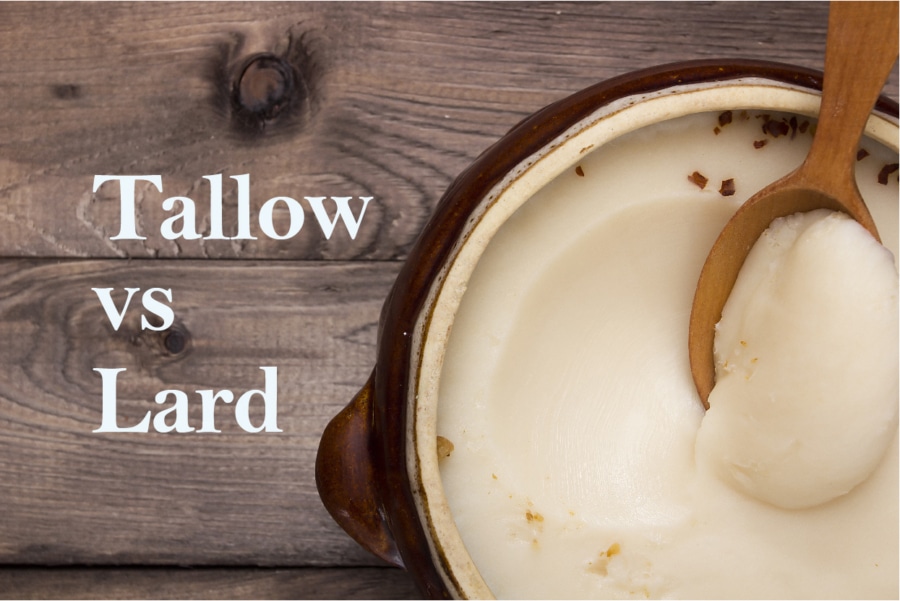
Tallow vs. Lard!
Today we’re taking the mystery out of one of the bigger debates among home baking enthusiasts: what is better to bake with, lard or tallow? Short answer: it depends! Both can help elevate your baked goods, but understanding their relative strengths and weaknesses is critical in achieving the best results in your kitchen. Tallow and lard are both rendered animal fats that are solid at room temperature and melt when heated. But there are subtle, important differences between the two that help bring out the best in your baking. We’ll explain the key differences between tallow and lard, helping you decide which fat is best for that next pie crust or batch of cookies.
What’s Tallow?
Tallow is rendered beef fat. Historically, it has been a staple in kitchens around the world, prized for its high smoke point and rich flavor. Tallow is typically harder and more brittle at room temperature compared to lard. It’s an excellent high-heat cooking fat for frying, searing, and roasting, and can be used as a substitute for vegetable oils in many recipes. While both have relatively high smoke points versus other fats, tallow has an even higher smoke point than lard. Its flavor profile is generally rich, savory, and beefy, adding umami to dishes. The flavor of tallow can vary depending on the diet of the cattle, with grass-fed tallow often having a more pronounced, “beefy” taste than that of grain-fed cattle.
Tallow For Baking
Tallow shines in savory baked goods, where its robust flavor complements ingredients without overpowering them. Tallow is a great option for:
- Biscuits and crackers: Tallow can create a tender crumb and a delicious savory note.
- Savory pies and pasties: The flaky crusts achieved with tallow are exceptional.
- Frying donuts or churros: Its higher smoke point makes it ideal for deep-frying, imparting a unique umami flavor.
What’s Lard?
Lard is rendered pork fat. It has a long-standing reputation in baking for its ability to create incredibly tender and flaky pastries. While its smoke point is lower than tallow, lard’s high-temperature stability still makes it an excellent choice for frying, creating a crisp crust that becomes soft and creamy. Lard is softer and more spreadable at room temperature than tallow, and its flavor is generally milder and more neutral, especially if it’s higher-quality, “leaf” lard. (If you really want to know, “leaf” lard is the premium, snow-white animal fat from around a pig’s kidneys and loin.)
Lard For Baking
Lard is a versatile fat that shines in a wide array of baked goods, particularly those where a neutral flavor and tender texture are desired. Lard is a great option for:
- Cookies: Lard can help create a soft, chewy texture in certain cookie recipes.
- Pie crusts: Lard is famous for producing the flakiest, most tender pie crusts.
- Biscuits and scones: It contributes to a light, airy texture.
- Pastries: Croissants, puff pastry, and other laminated doughs benefit from lard’s pliable texture.
Which One Should You Choose?
The choice between tallow and lard ultimately comes down to the specific recipe and your desired flavor profile.
- Use lard for: the flakiest, most tender pie crusts and pastries with a neutral flavor.
- Use tallow for: savory baked goods where a rich, beefy flavor is welcome, or for deep-frying.
Finally, some good news… you can combine the two fats for a unique blend of their best qualities. For culinary uses, the fats are melted together on low heat and stirred until the solids are cooked out, then filtered for a clear, solid product. Experiment with both to find the best results that work for you.
We’ll close with a fun fact: there are also lots of uses for both lard and tallow that extend beyond the kitchen, including skincare (their high nutrient content) and even for lubricating industrial machines!
Published: May 19, 2025
About The Culinary Center of Kansas City
Founded in 1996, The Culinary Center of Kansas City is the Midwest’s premier culinary arts center dedicated to food, wine, and culinary education. Located in a historic restored buggy barn in downtown Overland Park, Kansas, CCKC offers cooking classes, interactive events, private dining experiences, team-building programs, and a curated Kitchen Shop. For more information, visit kcculinary.com or call 913-341-4455.
Media Contact: Darren Palmet, Co-owner of The Culinary Center of Kansas City | 913-341-4455 | darren@kcculinary.com