









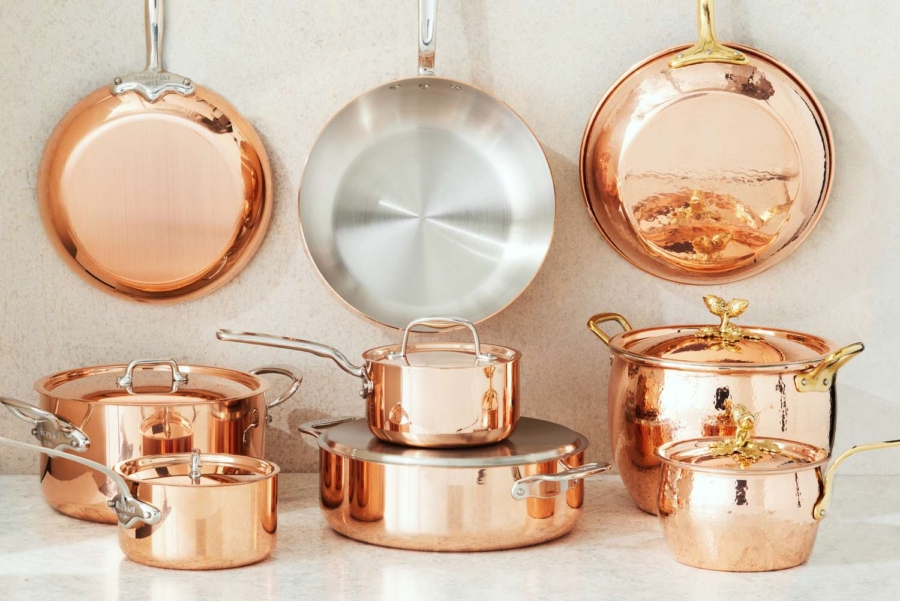
Copper Is Beautiful… But How Does It Stack Up?
At The Culinary Center of Kansas City, we generally gravitate toward stainless steel pots and pans in our cooking classes. Stainless steel cookware tends to be one of the more popular options that most people have in their kitchens, and we teach recipes with the intention that people can recreate them in their own kitchens with the cooking equipment they have.
That said, copper cookware has graced professional kitchens and home collections for centuries, earning a reputation as the gold standard among serious cooks. Its distinctive gleaming surface and exceptional performance make it a coveted addition to any kitchen, but copper pots and pans come with both remarkable benefits and notable drawbacks that every cook should understand.
The Advantages Of Copper Cookware
The most significant advantage of copper cookware lies in its unmatched heat conductivity. Copper conducts heat approximately 25 times more effectively than stainless steel, meaning it heats up quickly and distributes heat evenly across the entire cooking surface. This responsiveness gives cooks incredible temperature control, allowing for precise adjustments that can make the difference between perfectly caramelized onions and burnt disasters.
This superior heat distribution eliminates hot spots that plague other materials, ensuring your food cooks uniformly. Whether you’re melting chocolate, reducing sauces, or searing proteins, copper provides the consistent heat that professional chefs depend on for restaurant-quality results.
Copper cookware also offers impressive durability when properly maintained. High-quality copper pots can last generations, making them a worthwhile investment for serious home cooks. Many professional kitchens rely on copper pieces that have served faithfully for decades.
From an aesthetic standpoint, copper cookware adds undeniable elegance to any kitchen. The warm, lustrous finish creates a sophisticated atmosphere, and well-maintained copper pieces often become conversation starters when displayed on open shelving or pot racks.
The Disadvantages Of Copper Cookware
The most immediate drawback of copper cookware is its substantial cost. Quality copper pieces command premium prices, often costing several times more than comparable stainless steel or aluminum alternatives. A complete copper cookware set represents a significant financial investment that many home cooks find prohibitive.
Maintenance requirements present another challenge. Copper naturally develops a patina over time, and while some appreciate this aged appearance, maintaining the original bright finish requires regular polishing with specialized cleaners. This ongoing maintenance can feel burdensome for busy home cooks who prefer low-maintenance kitchen tools.
Copper cookware also demands careful handling and storage. The relatively soft metal can scratch, dent, or warp more easily than stainless steel alternatives. Copper pieces require gentle cleaning methods and careful storage to prevent damage that could affect both appearance and performance.
Safety considerations add another layer of complexity. Pure copper can react with acidic foods, potentially leaching into meals and causing health concerns. Most modern copper cookware addresses this issue with stainless steel or tin linings, but these protective layers can wear away over time, requiring professional re-lining services that add to the overall cost of ownership.
Weight presents a practical concern as well. Copper cookware tends to be heavier than many alternatives, which can make maneuvering large pots challenging for some cooks, particularly when filled with food.
Making The Decision
Copper cookware represents a trade-off between exceptional performance and practical considerations. Professional chefs and serious home cooks who prioritize precise temperature control and even heat distribution often find the investment worthwhile, despite the higher costs and maintenance requirements.
However, casual home cooks might find that modern alternatives like heavy-bottomed stainless steel or quality aluminum cookware provide adequate performance without copper’s drawbacks. The decision ultimately depends on your cooking style, budget, and willingness to invest time in proper maintenance.
Before purchasing copper cookware, consider your cooking habits, storage space, and long-term commitment to maintenance. While copper undoubtedly offers superior performance characteristics, its benefits shine brightest in the hands of cooks who will fully utilize its capabilities and properly maintain these beautiful, functional pieces.
At our Kitchen Shop, we have a selection of stainless steel, carbon steel, non-stick, and enamel cookware from Made In and Le Creuset, so swing by and check them out. We are always happy to talk shop, make recommendations, and share recipes!
Published: June 16, 2025
ABOUT THE CULINARY CENTER OF KANSAS CITY
Founded in 1996, The Culinary Center of Kansas City is the Midwest’s premier culinary arts center dedicated to food, wine, and culinary education. Located in a historic restored buggy barn in downtown Overland Park, Kansas, the CCKC offers cooking classes, interactive events, private dining experiences, team-building programs, and a curated Kitchen Shop. For more information, visit kcculinary.com or call 913-341-4455.
Contact: Darren Palmet, Co-owner of The Culinary Center of Kansas City | 913-341-4455 | darren@kcculinary.com